In physical AI, capital and technology
are concentrated on the robot's body and brain.
EdgeLink builds the lifecycle of the spaces
where robots will work: the Robot Working System.
From design to unmanned operation,
the whole span runs on the NVIDIA stack.
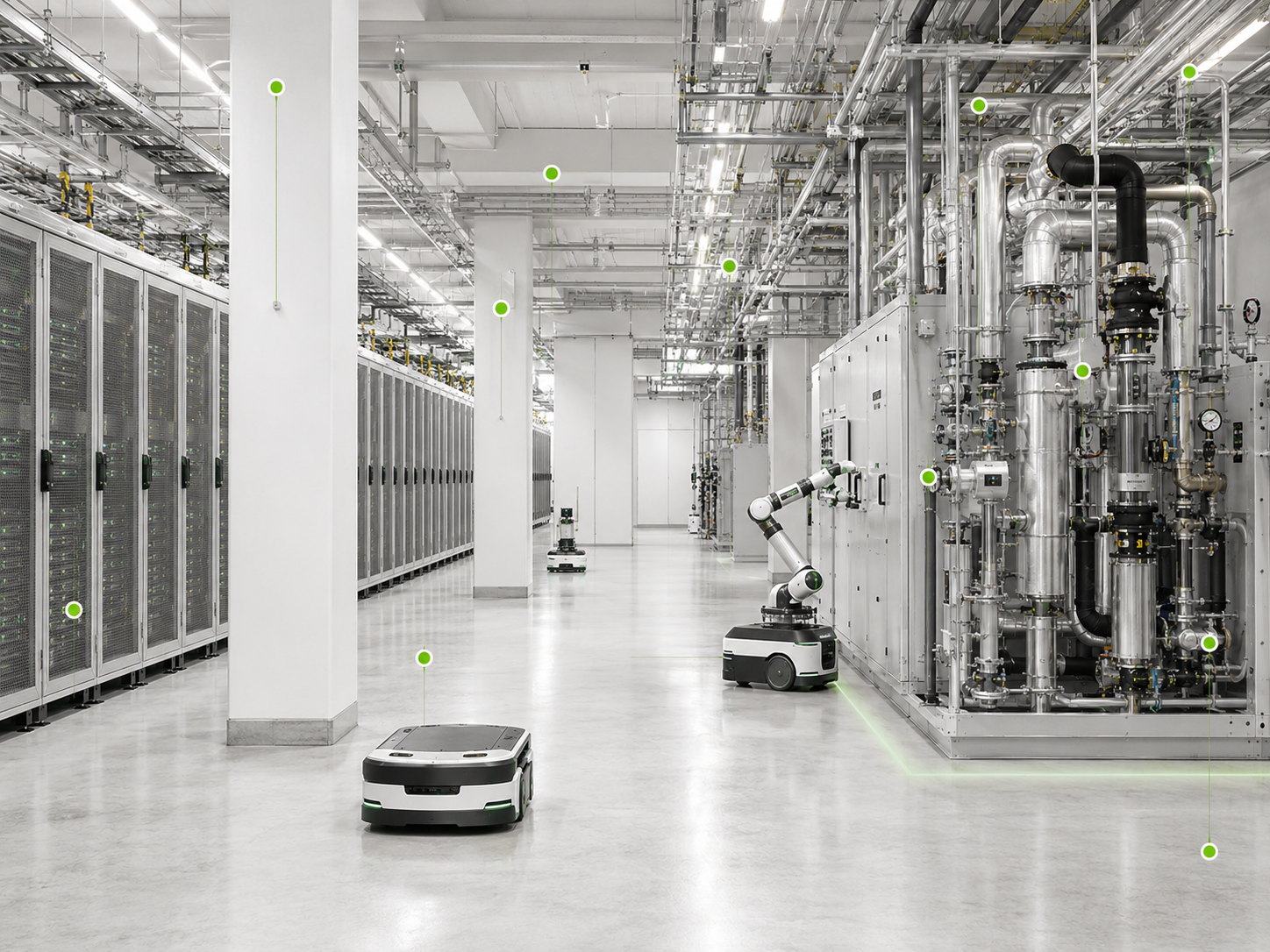
Robots are not held back by a shortage of robots.
They are held back because no space is ready for them to work in.
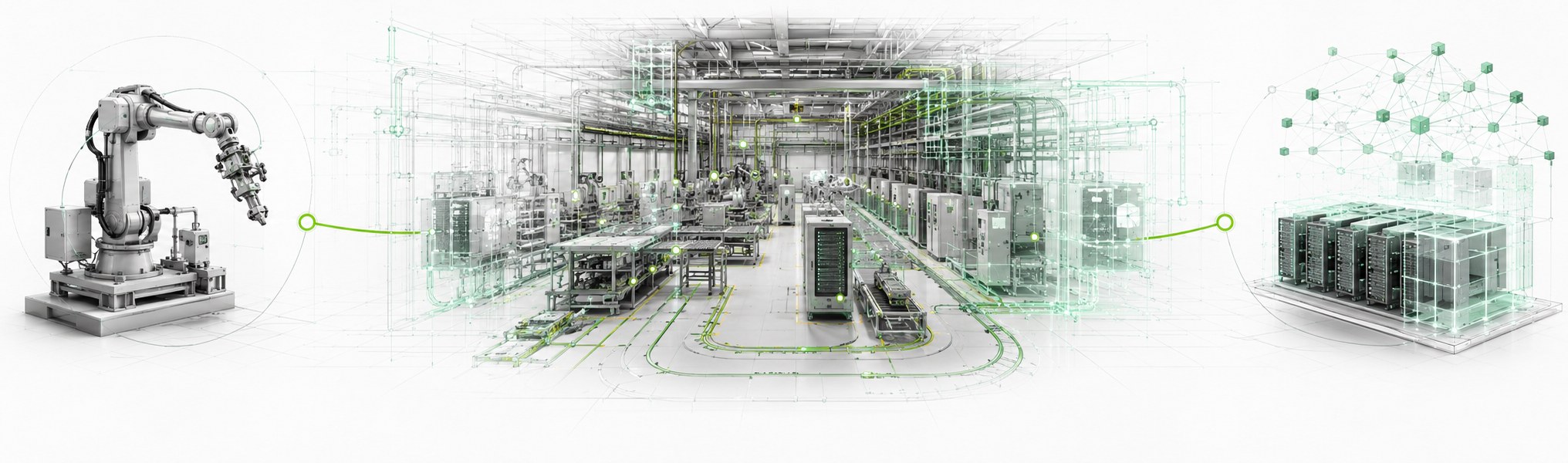
Capital and talent are concentrated on the robot's body and the foundation model. Investment and technology have not yet reached the work of preparing the spaces where robots will operate, so few spaces are ready for a robot to be deployed into.
Robot pathways, measurement points and edge de-identification routes are physical conditions set by concrete and piping. Adding them after commissioning costs far more in time and money, so the design stage is the most economical point to build them in.
Synthetic and crawled data make it hard to prove which cause produced which result. Only records verified in a real space become assets that robot training can use.
Six functions cycle through three stages: Design, Setup and Operation.
Each function's output is the precondition for the next, and the operating data
of the last flows back into the design of the next space, closing the loop.
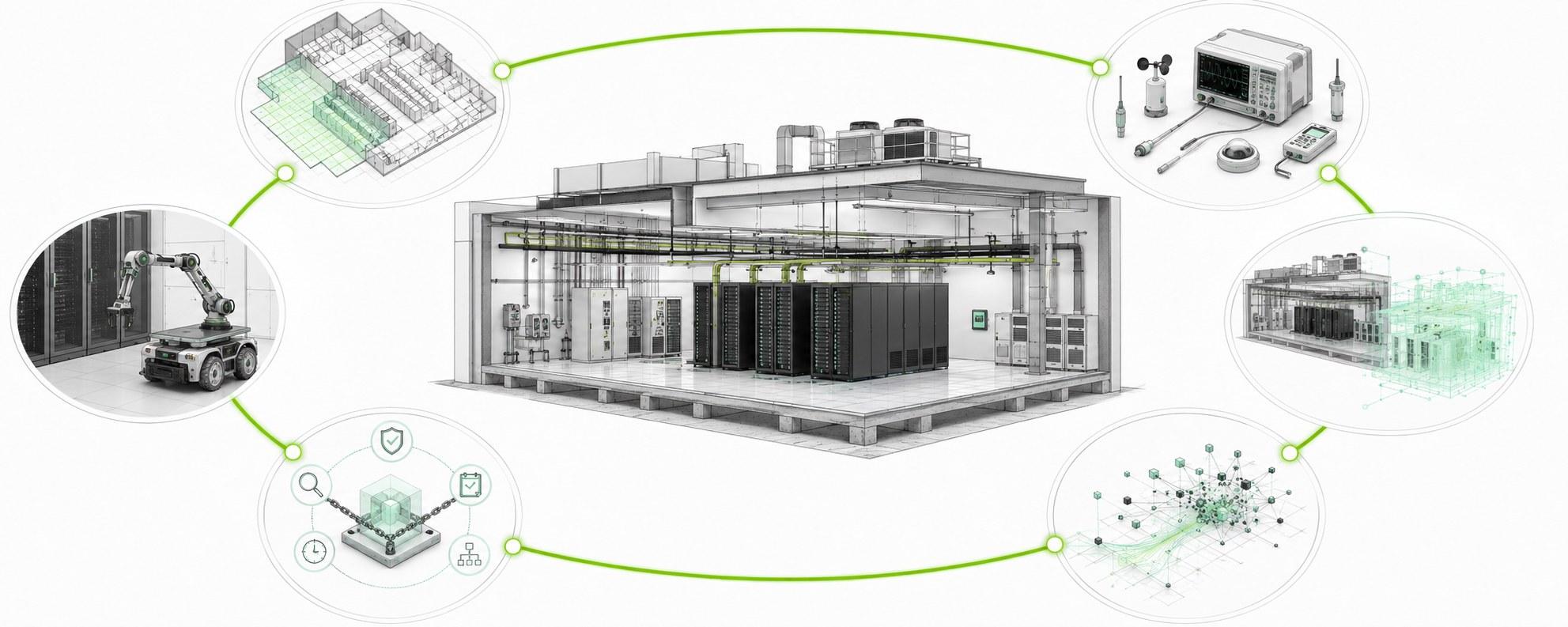
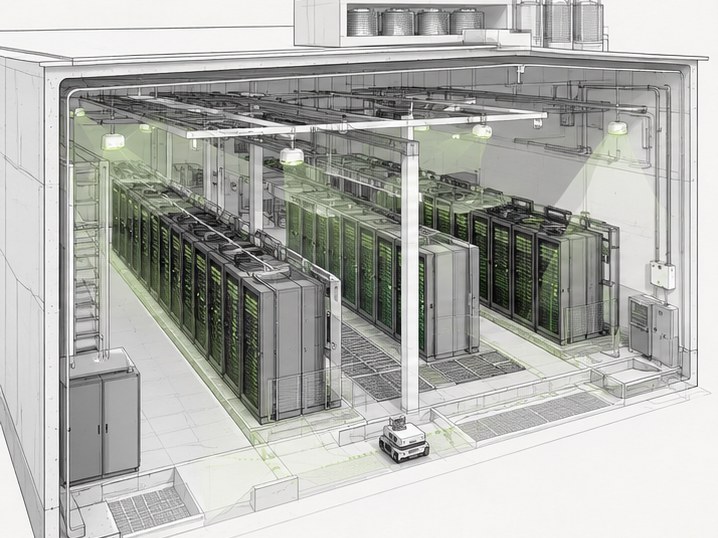
Generates layouts and evaluates capacity, feasibility and cost. What sets it apart from existing tools is that it generates the data-collection design alongside: measurement points and robot pathways. The output is exported as OpenUSD and carried straight into the twin. This is Design-for-Data.
Quantifies what a space actually does under maximum load. The GPU cluster itself becomes the controllable load source, instrumented through DCGM telemetry. These measured values are the reference for Real-to-Sim calibration.
A continuously synchronized digital twin on Omniverse DSX Blueprint, built on measured reference values rather than assumptions. This twin becomes the training environment for robot policies.
Attributes the cause of an operating incident and seals the evidence, so that what happened is recorded as proof rather than as a claim.
Telemetry from the running infrastructure labels whether a robot task succeeded, with no human annotation and no simulation. Only verified records enter the dataset, and de-identification happens at the edge, so raw footage never leaves the site.
Robots trained on verified data carry out operation and maintenance of the space, and their operating data feeds back into the design of the next one. We do not build the robots; the bodies come from the ecosystem.
 AIDC
AIDC
High-density equipment, heat and liability all call for operation without people on the floor.
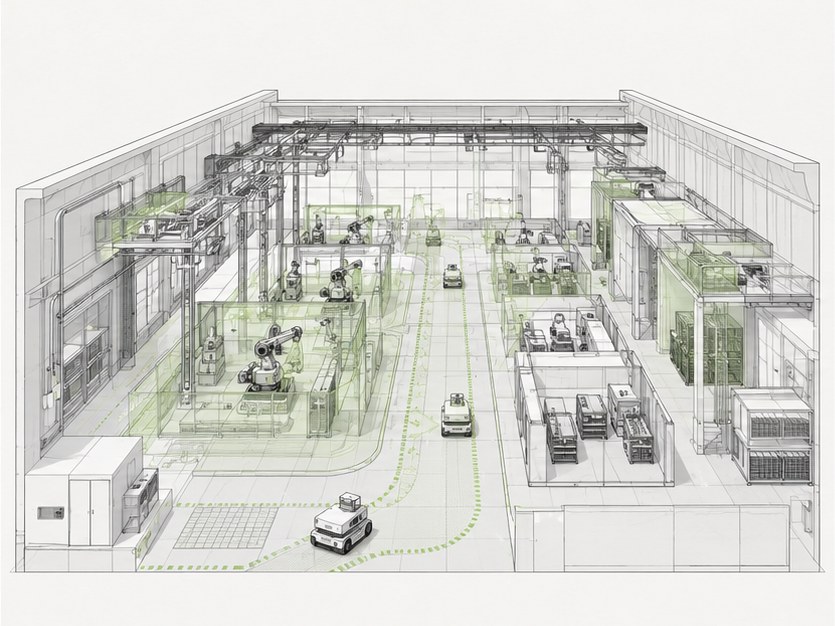 Construction & manufacturing
The workforce is shrinking faster than the work is.
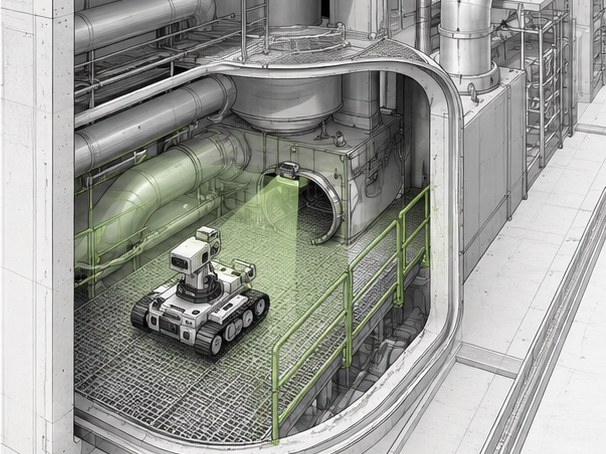 Defense & hazardous facilities
The cost of sending a person in cannot be expressed in money.
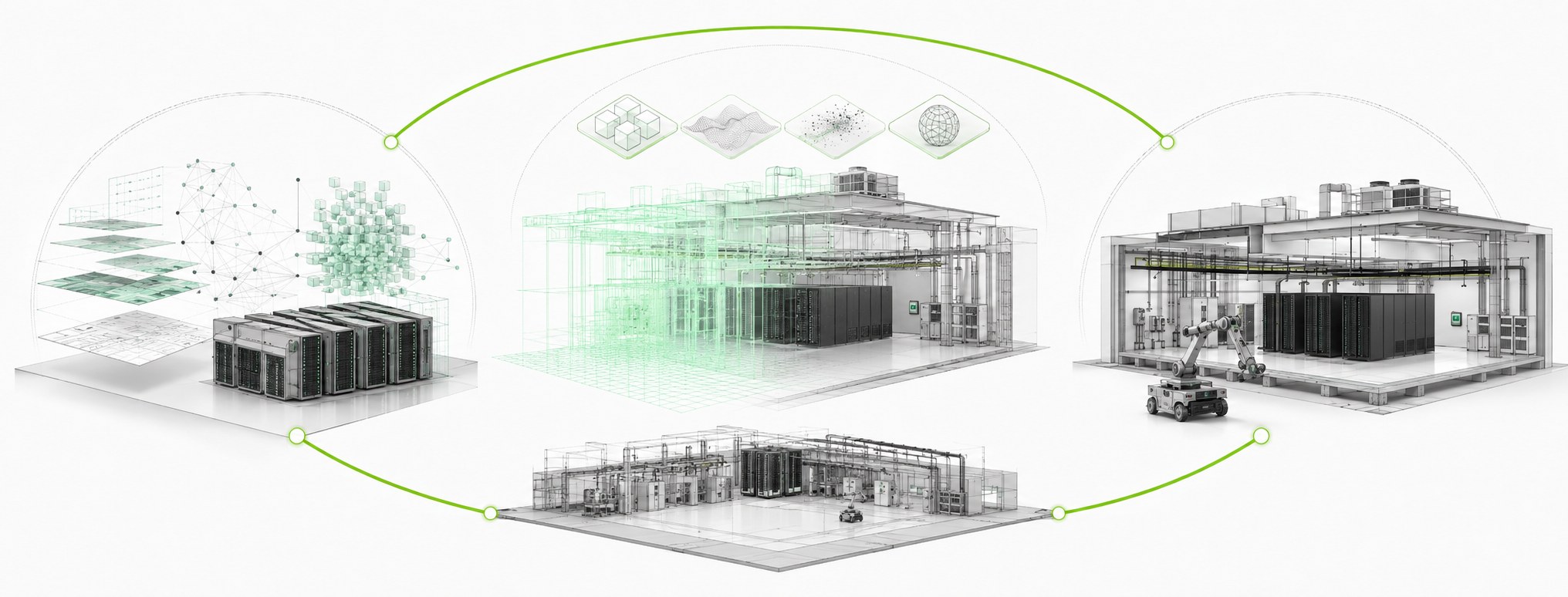
A twin demo built on DSX Blueprint, now being extended to the actual target building. An early adopter of NVIDIA's AI-factory digital twin standard, from the design stage rather than after commissioning.
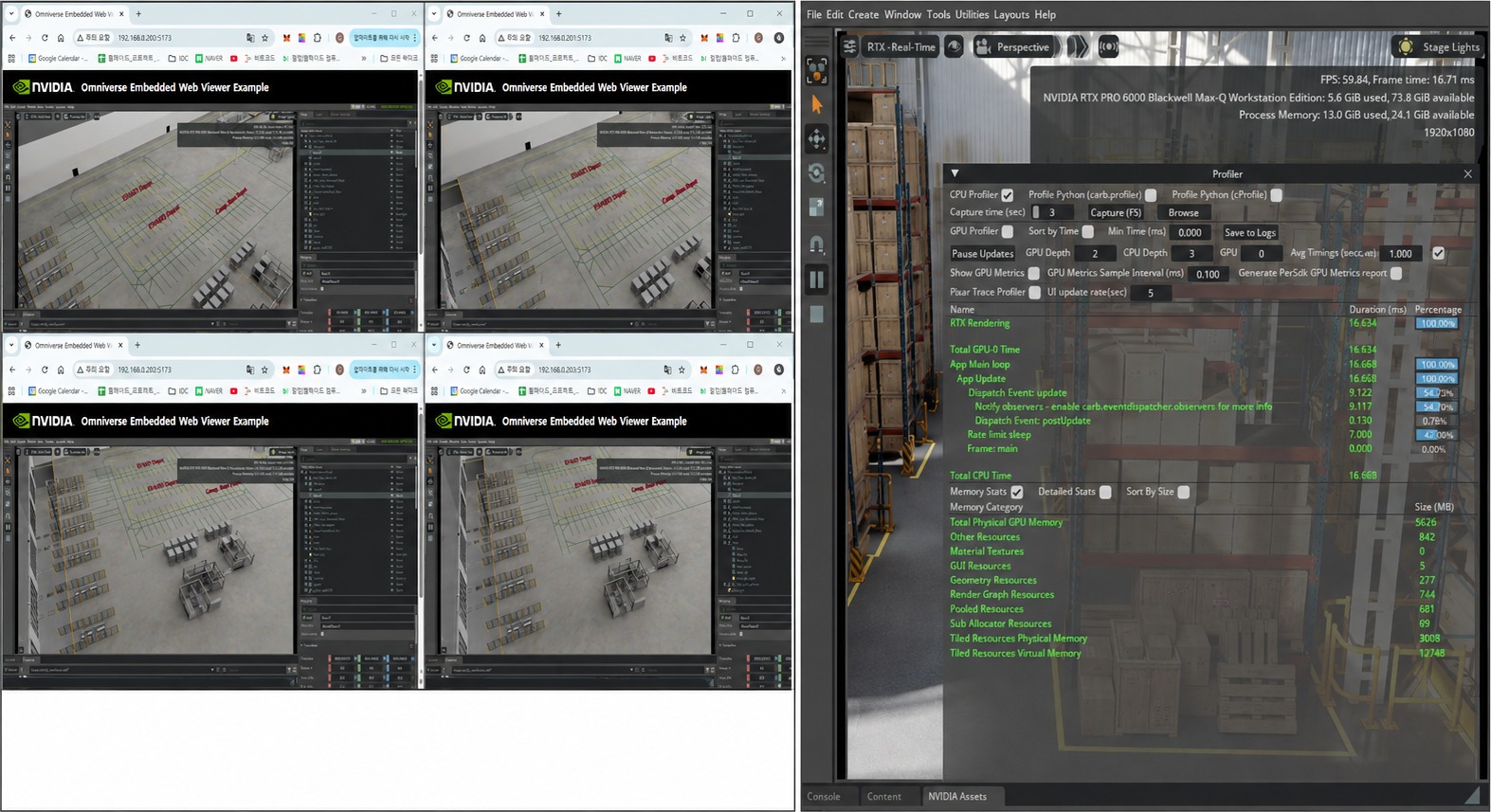
Multi-instance performance validated in March 2026 with a partner company: four concurrent instances rendering a real factory scene at 38–50 fps on RTX 6000 Blackwell.
The first space is specified at 3 racks (216 GPUs) with direct liquid cooling. Measurement points and the edge de-identification path are already in the design, which makes the facility itself the proving ground where the loop runs, function by function.
We follow NVIDIA's three-computer architecture (training, simulation, execution) exactly as it is defined.
Our product is the layer that runs all three as one lifecycle loop around a real space.
And the boundary is the same one NVIDIA draws: we do not build robots.
EdgeLink is responsible for the design and the data-collection master plan
of a commercial facility being built in Seoul.
It is the first space where the Design-for-Data principle was applied to actual drawings.
The measurements it produces become the reference values
for judging whether a robot task succeeded, and that method has been filed as a patent.
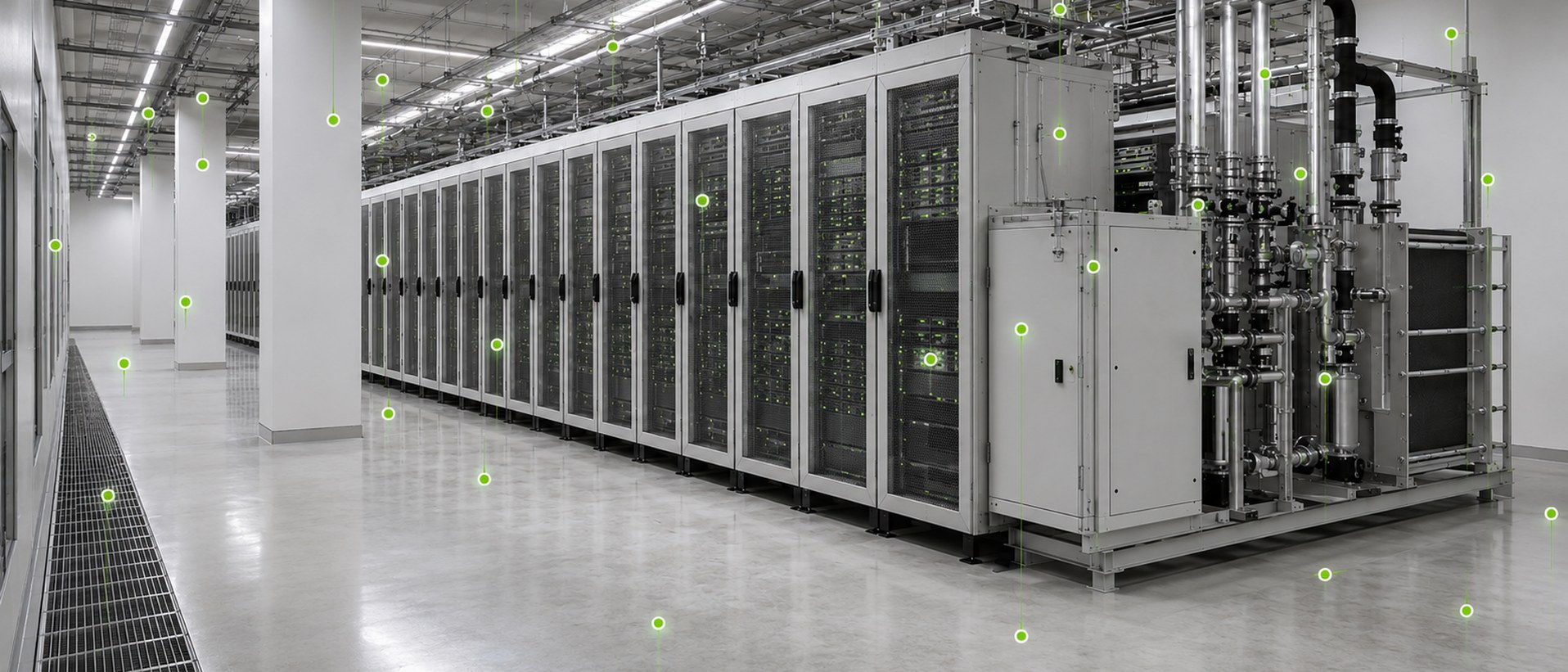
216 GPUs, direct liquid cooling. Target operation 2027.
Power, cooling and environment, fixed at the design stage rather than after commissioning.
Camera to edge processing to disposal of the original, inside the server room design.
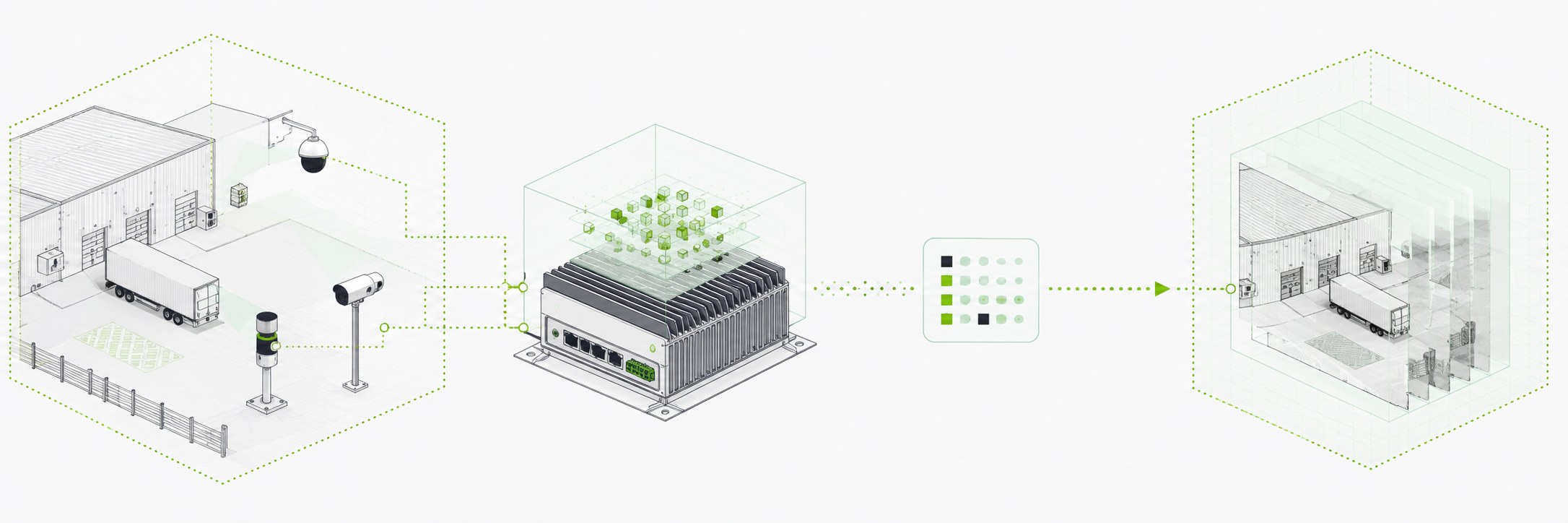
The environment layer can only be built by people who know spaces.
All three trained in the same place: architecture at Seoul National University.
Edgelink Inc. founded in Seoul, Korea.
Isaac Sim multi-instance validation with a partner: 4 concurrent instances, 38–50 fps on RTX 6000 Blackwell.
First patent filed on robot training-data generation (KR 10-2026-0142457); a causal-attribution filing is in preparation.
SIM engine demonstrated internally, DSX Blueprint twin demo built, first-space data-collection design fixed in the drawings.
First space in operation (target): 3× GB300 NVL72, 216 GPUs, direct liquid cooling, Seoul. The loop starts turning.
EdgeLink works with robot makers, foundation-model teams and facility owners
who need a space that is ready for robots to work in.
We collaborate with Seoul National University on robotics and data research.
